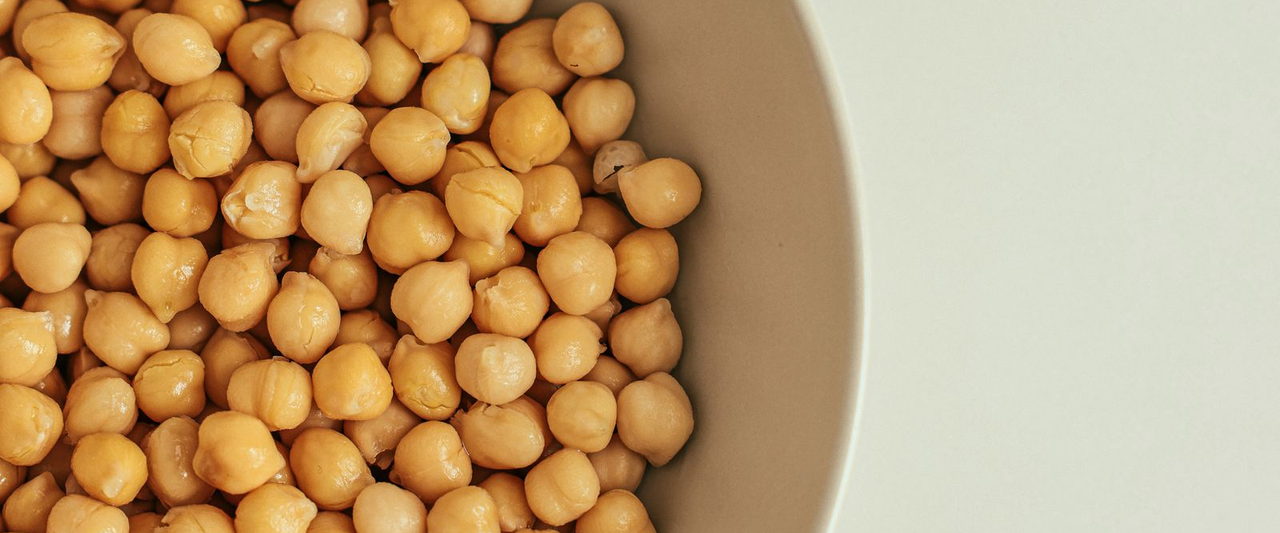
Reading Chana at ₹7,550 a Quintal: A Tight Market Trading Against a Record Buffer
This briefing reads the chana market in five parts, and the parts spell the crop: C, H, A, N, A — a crop sown into dry ground in its southern belts, a government holding the largest pulses buffer it has ever carried, arrivals too thin to test demand, imports priced above the domestic market, and an assessment that has to hold both of those truths at once. Chana is the rabi pulse that sets the tone for the whole pulses complex, and this October it is trading firm for reasons that are visible, measurable and partly temporary.
C — Crop: sown into a moisture deficit
Start where the season starts, in the soil. Chana production in 2025–26 held at 8.85 million tonnes, up 1 per cent, because better yields offset a 2 per cent acreage decline — Madhya Pradesh's area alone fell 18 per cent. The new crop now being sown faces a harder opening. The June–September monsoon ended below normal, and Intfloat's October outlook puts the deficits exactly where chana grows: Marathwada at −39 per cent, Rayalaseema at −40 per cent, North Interior Karnataka at −31 per cent and Vidarbha at −27 per cent, with soil moisture at end-September clearly lower than a year ago across central India. Uttar Pradesh and East Madhya Pradesh are the exceptions, and sowing there can start on time. In the Deccan, it waits on October rain that the seasonal outlook does not promise.
The support price will not rescue the acreage decision. The chana MSP rose only 1.4 per cent for the coming season, to ₹5,958 a quintal, against 6.7 per cent for mustard — and per-hectare returns trail mustard almost everywhere the two compete. Chana is asking for rabi land from a weak negotiating position, in the driest of its belts, at the exact moment sowing decisions are being made.
H — Holdings: a record buffer sits over the market
Against that tightness stands the largest official stock position the pulses market has carried. The government plans to release its record 4.5 million tonnes of pulses buffer stock in a calibrated manner after rabi sowing is completed, Informist reported on 14 October, citing a commodity analyst's reading of the plan — a release intended to curb price increases, which would put temporary selling pressure on chana in particular. Trade assessments put the chana share of the central pool at about 1.95 million tonnes — roughly a fifth of a full year's production, held by one seller.
The releases have already started, in the measured way the market expected. NAFED's Bhopal unit invited bids for the sale of chana, moong, masur and urad in two e-auctions on 14 October, without specifying quantities. That pattern — small tenders, no announced calendar — is itself a price signal. Every tender reminds buyers that the ceiling exists, without telling them how much weight is behind it.
A — Arrivals: thin mandis, a price 27 per cent over MSP
The spot market, meanwhile, is trading as if the buffer were not there. Chana in Indore changed hands at ₹7,550–7,600 per quintal on 14 October, down ₹50 on the day after a sharp run-up, as demand cooled once buyers had stocked ahead of Diwali. Set that against the floor: at ₹5,958, the new MSP sits about 27 per cent below the Indore price. The Karnataka procurement approval gives the floor's recent history — the Centre had announced an MSP of ₹5,875 for the 2026–27 marketing season and approved purchase of about 1.01 lakh tonnes in that state alone. At current mandi levels, procurement is a backstop nobody needs; the market is clearing well above it.
| Chana, mid-October 2026 | Figure |
|---|---|
| Indore spot price, 14 Oct (₹/quintal) | 7,550–7,600 |
| MSP, rabi 2027–28 (₹/quintal) | 5,958 |
| Spot premium over MSP | ~27% |
| Production 2025–26 (million tonnes) | 8.85 |
| Desi imports, Apr–Jul 2026 (tonnes) | 71,000 (+155% y/y) |
| Central-pool chana, trade estimate (million tonnes) | ~1.95 |
Sources: Informist, 14 Oct 2026; Intfloat October 2026 outlook; trade assessments via Commodity Board. Table: Farmioc.
Arrivals are the reason the premium holds. Informist's wire attributes the market's support to limited mandi arrivals, weather-related production risks and higher import costs — and the old crop is nearly exhausted this deep into the season, so thin arrivals are partly calendar. But partly is not wholly: mills are reported running low pipeline stocks into the festive demand peak, which makes each arrival day matter more than it should.
N — New imports: priced above the market they would supply
Imports are not riding to the rescue, because the world price is above India's. Desi chana imports rose 155 per cent in April–July 2026 — to just 71,000 tonnes, from a small base, after full-year 2025–26 desi imports had fallen a third to about 1,007 KMT. Trade assessments put Australian chickpea offers around $775 a tonne CNF for October–November shipment, with replacement cost above ₹8,000 a quintal — above the Delhi cash price, which the same assessments place near ₹7,660–7,700. When the import parity sits above the domestic quote, the border is closed by arithmetic, whatever the duty schedule says. The substitution valve is yellow peas, trading near ₹4,600–4,700 a quintal — a gap of roughly ₹3,000 against Delhi chana, wide enough to pull demand sideways wherever blending is technically possible.
One rumour needs naming so it can be set aside: talk of an import duty cut pressured prices mid-October, and the India Pulses and Grains Association advised participants not to believe such reports unless an official announcement is made. None had been made when Informist filed on 14 October.
A — Assessment: firm now, capped above, decided by sowing
The honest summary is a range, not a direction. Spot supply is tight, festive demand is real, and Intfloat's study of past El Niño years — an analysis, labelled as such — found chana prices rose 5–10 per cent from July–September into October–December before correcting from January; on that pattern they expect market prices to stay above MSP through 2026–27. Against that sits 1.95 million tonnes of official chana and a stated intent to release buffer stock once sowing is done. Rallies in this market run into a seller with a policy mandate; sell-offs run into empty mandis. That is a capped, jumpy market, not a trending one.
So the decisions split by desk. Dal mills: cover nearby requirements in tranches rather than chasing arrival days — the buffer calendar, when it comes, will offer better entries than a thin mandi does. Traders: the two dates that matter are the close of rabi sowing, which starts the buffer-release window, and the first official acreage read on how much chana the dry Deccan actually planted. Lenders with pulses exposure: the acreage risk this year is geographic, not general — concentrated in Marathwada, Vidarbha and the Karnataka–Rayalaseema belt, while the northern book sowed on adequate moisture. PriceHub tracks the mandi prices, arrivals and MSP spread behind this reading daily; the spread, not the headline price, is the number to watch.