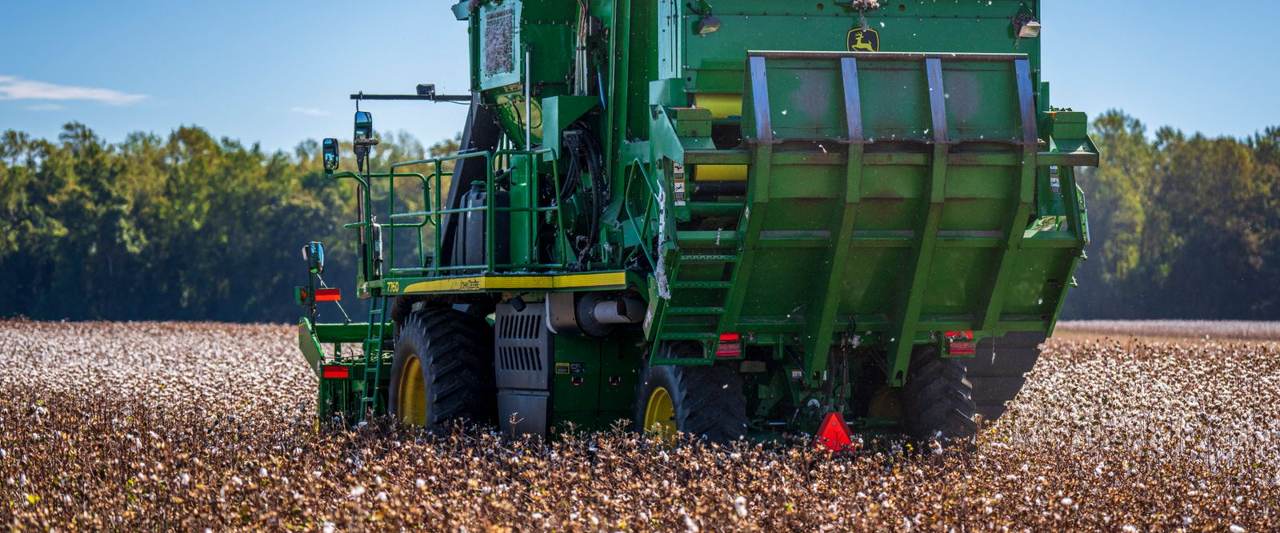
Reading Cotton at ₹68,000 a Candy: Short Crop, Open Import Window, and a Floor That Is Not Binding
This briefing reads the cotton market in six parts, and the parts spell the crop: C, O, T, T, O, N. Cotton should be getting cheaper. The new crop is arriving, and October is when domestic prices normally soften. Instead lint has risen ₹4,000 a candy in twenty days, the government is expected to extend duty-free imports past their 31 October expiry, and the trade's own estimates put this season's crop at least five million bales short of demand. Each of those facts points a different way. Taken in order, they describe a market that is tight now and hostage to one notification.
C — Costs: lint is up ₹4,000 a candy in twenty days
Cotton prices have climbed from ₹64,000 to ₹68,000 per candy on an ex-gin basis in about twenty days, an unusual rise for October. The pressure lands on more than 1,500 textile mills in Tamil Nadu alone. The secretary of the Indian Cotton Federation gave the reason in one line: arrivals are not as expected. Growers are holding stock back in anticipation of higher prices, the crop is expected to be smaller, and the scheduled return of import duty on 1 November hangs over every purchase decision a mill makes this week.
O — Output: the crop is estimated well below demand
The balance behind the price is stark, and it is an estimate, not a count. India's cotton output is likely to fall below 29 million bales in 2026–27, against demand of more than 34 million bales, according to trade estimates reported by Reuters on 26 October. An S&P Global analyst quoted in the same report put the stock-to-use ratio at about 31 per cent, the lowest in five years. A gap of that size does not close with arrivals. It closes with imports, with demand giving way, or with price doing the rationing — and so far price is doing it.
| Cotton, 2026–27 season | Figure |
|---|---|
| Lint price, ex-gin (late Oct) | ₹68,000 per candy, up from ₹64,000 in ~20 days |
| Output estimate (trade) | Below 29 million bales |
| Demand estimate (trade) | Above 34 million bales |
| Stock-to-use ratio | ~31%, lowest in five years |
| Cotton imports, Apr–Sep 2026 | $1.1 billion, up 63% year on year |
| MSP — medium staple / long staple | ₹8,267 / ₹8,667 per quintal |
Sources: Textile Value Chain, 24 October 2026; Reuters, 26 October 2026; PIB CCEA kharif MSP release, 13 May 2026. Estimates are trade estimates as reported. Table: Farmioc.
T — Trade window: the duty holiday is expected to run to December
India waived the 11 per cent duty on cotton imports for five months from 1 June through 31 October, to carry mills through the lean season. On 26 October, Reuters reported that the government is expected to extend that exemption for another two months through December, after inter-ministerial consultations, with an order expected soon. Expected is not notified — that distinction is the whole trade this week. Imports have already responded to the open window: cotton imports rose 63 per cent year on year to $1.1 billion in the April–September half, trade ministry data show. If the extension lands, US, Brazilian and Australian cotton keeps landing duty-free against a firm domestic market. If it slips, mills that deferred purchases face the duty and the ₹68,000 market at the same time.
T — Telangana: the procurement machine is built, and mostly standing by
While mills chase imports, the support system has been scaled up for the opposite problem. Telangana has expanded Cotton Corporation of India procurement centres from 122 to 133, notified 335 of its 356 ginning mills as purchase centres across 30 districts, and linked details of 12.75 lakh farmers to the Kapas Kisan app as of 21 October. The state puts its cotton area at 48.20 lakh acres and production at an estimated 29.43 lakh tonnes. Yet the same report puts Telangana's prevailing market price at around ₹9,000 a quintal — above the support price. The centres matter this season less as buyers of first resort than as a floor that is already built if the import extension breaks domestic prices in December. Infrastructure bought before it is needed is cheap insurance. The test is whether quality testing, transport and payment speed hold if arrivals surge into it.
O — Official floor: ₹8,267 and ₹8,667, and the market is above both
The floor itself was raised this season. The Cabinet fixed kharif 2026–27 support prices at ₹8,267 per quintal for medium-staple cotton and ₹8,667 for long staple, an increase of ₹557 a quintal, in the CCEA release of 13 May 2026. Kapas registrations for support-price sales run on the Kapas Kisan app, with Gujarat's window open until 31 October. With spot kapas trading around ₹9,000 a quintal in Telangana and lint at ₹68,000 a candy, the floor is not binding today. Its role is different: it sets the level at which the Corporation becomes the buyer, and therefore the level below which ginners and lenders need not model a free fall — unless an extended duty-free window pushes the market down to test it.
N — Next: one notification decides the quarter
Everything in this market now waits on a single piece of paper. A duty-free extension through December caps domestic prices, rewards mills that contracted imports early, and squeezes growers who held stock back for a rise. No extension, and the tightest stock position in five years meets the full arrival season with the duty back on. There is a third party in that decision: lenders. Ginners are carrying working capital against lint bought or held near ₹68,000 a candy, and cotton growers' loan repayments in Telangana, Gujarat and Maharashtra are being planned against prices the notification can move in either direction within weeks.
Decision: price the notification, not the headline crop number
For mills, the practical move is cover, not forecast: secure a share of November–December requirements at current import parity while the extension is expected, and keep the balance short until the order is actually issued. For growers and traders holding kapas, staggered sales beat a single bet — the ₹9,000 market already pays more than the support price, and the same notification that helps mills can take that premium away. For lenders with ginner and trader exposure, mark the inventory to the post-notification market, not the purchase price, and watch the notification date the way you would watch a monsoon onset. PriceHub tracks the mandi, lint and import series behind this reading across 200+ crops, so the spread between the domestic price and the import window stays visible while the decision is pending.
Farmioc is India's agriculture data analytics and agri trading company. Explore PriceHub for commodity market intelligence across 200+ crops, or DataStore for supply, demand and yield analytics.