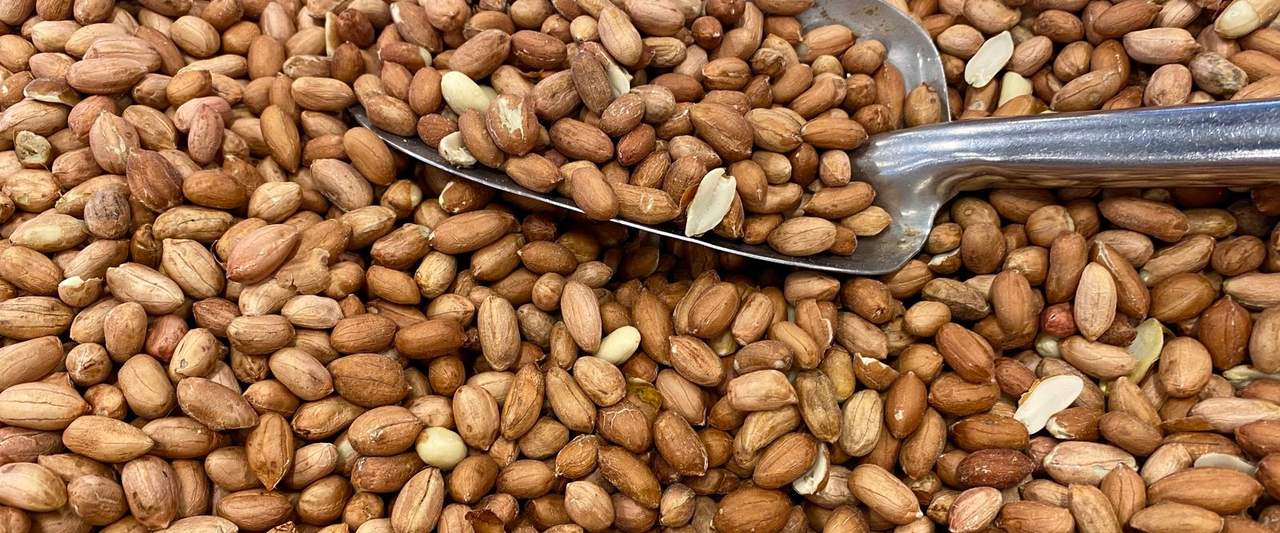
Reading Groundnut in Six Parts: A PEANUT Briefing on a Crop Down a Fifth in Gujarat
This briefing reads the groundnut market in six parts, and the parts spell the name the trade uses for it: P, E, A, N, U, T. Gujarat, the state that sets India's groundnut balance, is heading for a crop about a fifth smaller than last season on a survey projection. Mandi prices have already climbed to the support level, harvest arrivals are masking tightness that will show once the peak passes, and export quotes are edging up instead of easing. Each claim below carries its number.
P — Production: a fifth of the Gujarat crop is gone on paper
A survey across Gujarat's main peanut districts puts the state's 2026-27 kharif crop at about 3.33 million tonnes, down from about 4.18 million tonnes last season. That is a fall of 20.5 per cent, and it is a survey projection, not a final official estimate — read it as the best current field reading, subject to revision as harvesting completes. Even allowing for revision, a shortfall of roughly 0.85 million tonnes in the leading producing state is not a rounding error. It sets the tone for every price that follows.
E — Early prices: the mandi has reached the floor from below
All-India median mandi prices rose through October, from about ₹6,950 to ₹7,000 a quintal in the early part of the month to around ₹7,500 a quintal by 24 October, with Gujarat trading above the national median. Set that against the official floor. The kharif support price for groundnut for 2026-27 is ₹7,517 per quintal, raised ₹254 by the Cabinet in May. In other words, the market has climbed to the support price during harvest, the very weeks when arrivals usually push prices below it. A harvest-season price sitting on the MSP tells a buyer more than any forecast does.
A — Area and yield: both halves of the equation fell
The survey breaks the shortfall into its two parts. Planted area eased from about 2.20 million hectares to about 2.07 million hectares. Yield did the heavier damage, falling from about 1,902 kg a hectare to about 1,607 kg a hectare. The report attributes the yield loss to inadequate monsoon rain in key districts, with crops stressed at pod-filling, the stage where groundnut has no recovery left in the season. Some pockets, around Keshod and Junagadh, did better. Averages hide that, and local buying will feel it first: two mandis in the same state are not facing the same crop this year.
| Gujarat kharif groundnut (survey) | Last season | 2026-27 projection |
|---|---|---|
| Area | ~2.20 million ha | ~2.07 million ha |
| Yield | ~1,902 kg/ha | ~1,607 kg/ha |
| Production | ~4.18 million tonnes | ~3.33 million tonnes (-20.5%) |
Source: district survey reported 24–27 October 2026; projection, not a final estimate. Farmioc.
N — National balance: Gujarat is not an isolated shortfall
Gujarat's drop would matter less if other states compensated. On the assessments cited in the same report, they have not. India's total groundnut production for 2026-27 is seen about 18 per cent below last season, driven mainly by yield losses rather than a large acreage cut. That distinction counts for lenders and stockists. An acreage cut can reverse next season on a price signal. A yield-driven shortfall across states points to weather that hit the crop where it stood, and it leaves carry-in stocks as the only buffer. There is no second Gujarat waiting to fill the gap.
U — Users: crushers, shellers and exporters will bid for the same lots
Harvest arrivals are flattering supply right now. Seed is moving because farmers sell at harvest, not because the balance is comfortable. The report's outlook — labelled here as outlook, not fact — is that once peak marketing passes, competition for higher-quality lots intensifies, with crushers needing oilseed, shellers needing table grades, and exporters needing lots that meet aflatoxin requirements for overseas buyers. Quality becomes the contested variable. A buyer who waits for a post-harvest dip may find the dip applies only to ordinary lots, while the grades actually needed are already committed.
T — Trade: export quotes are firming in small, steady steps
Export prices confirm the undertone without dramatising it. On 24 October, Indian bold 40-50 kernels from Gondal were quoted at €1.09 a kg FOB, up a cent from the previous quote. Java 70-80 from New Delhi stood at €1.17 a kg, also up a cent, and roasted split grades at €1.23 a kg. Through the first three weeks of October those quotes rose in repeated steps of one to two cents. That pattern — small, regular increases, no spike — is what a tightening balance looks like before it becomes a headline. Sellers are not discounting to move volume they do not have.
The decision
Buy quality early, and do not budget for a harvest dip that the MSP arithmetic already rules out. With the mandi median at about ₹7,500 against a ₹7,517 support price, downside from here needs either a survey revision sharply upward or arrivals far heavier than the yield figures imply. Crushers and exporters who secure aflatoxin-reliable lots during peak arrivals are buying the one part of this market that only gets scarcer. Lenders against groundnut stocks should mark collateral to the tighter national balance, not to last season's looser one.
PriceHub follows mandi medians against MSP and the arrival pace that separates real supply from harvest flow, so a buyer can see when the peak is passing and the tightness underneath it starts to price.