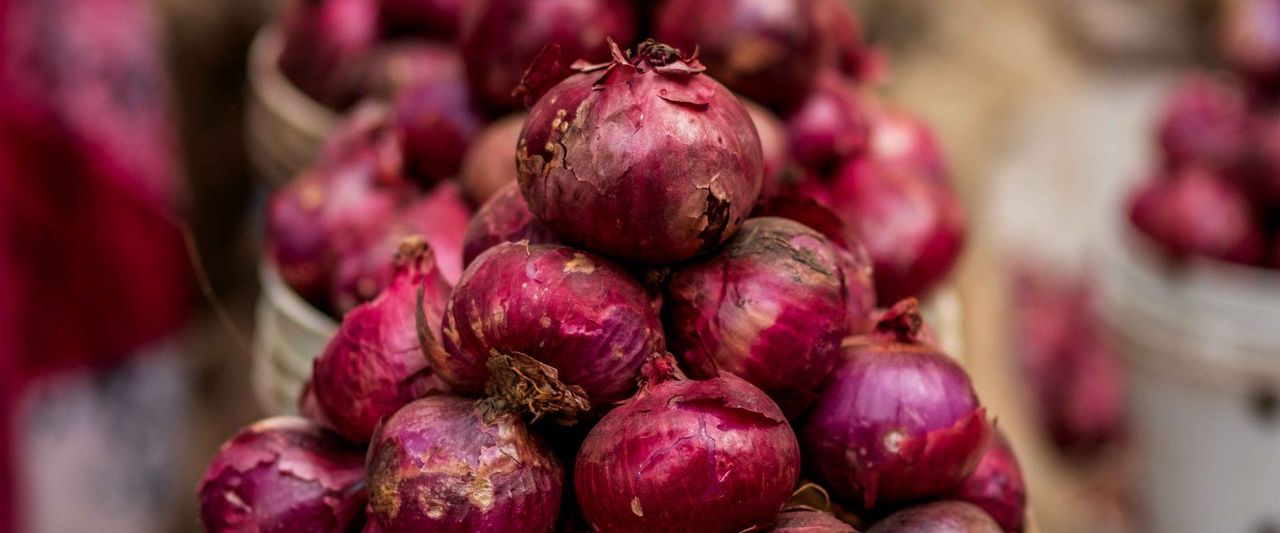
Reading Onion Through the Kharif Gap: An ONION Briefing on a Late Crop, a Thin Buffer and ₹60 Retail
This briefing reads the onion market through five parts that spell the crop: O, N, I, O, N. The national production estimate says supply is comfortable. The biggest producing state says its kharif crop may be down by nearly two-fifths, fresh arrivals are late, and retail prices have jumped in ten weeks. Both statements are in the official and market record. A buyer who reads only one of them will misprice November.
O — Output: a flat national estimate, a damaged Maharashtra crop
Start with the contradiction, because it is the story. The Department of Consumer Affairs estimates onion production at 307.37 lakh tonnes in 2025-26, broadly in line with 307.67 lakh tonnes the year before. Against that, the chairman of the Lasalgaon APMC — Asia's largest onion market — told Bernama there could be a 30 to 40 per cent production drop in Maharashtra because of drought. These are not the same number measured twice. The first is an annual national estimate made before the kharif damage was clear. The second is a kharif-season reading from the state that grows the export crop. Procurement plans built on the annual figure alone will walk into the kharif gap unprepared.
N — New kharif arrivals are late, and the calendar is not helping
Irregular rainfall and long dry spells through the monsoon delayed the fresh kharif crop — the harvest that normally starts closing the lean season in October. The Ministry of Consumer Affairs said on 9 October that fresh kharif onions were beginning to arrive from Karnataka, Andhra Pradesh and Rajasthan, with stored stocks continuing to meet demand, and that arrivals would build in the following weeks. That was nearly four weeks ago. The arrivals have come, but slowly, and they are running into the year's sharpest demand week: Deepavali falls on 8 November. A late crop meeting a fixed festival date is how a supply delay becomes a price spike.
I — India sells onions to the world, and Maharashtra carries that trade
India produces about 30 million tonnes of onions a year and exported about 1.5 million tonnes of fresh onions last year, according to APEDA figures cited in the Bernama report. Maharashtra accounts for more than half of those exports. In the current year, exports in April–June alone stood at 3.82 lakh tonnes, led by Malaysia, Sri Lanka, the UAE and Nepal. Malaysia takes more than half its onion supply from India. So a Maharashtra kharif shortfall is not a domestic story only: export prices for standard red onions are already quoted at US$500 to US$700 per tonne, and every week of delayed arrivals keeps export buyers bidding against the domestic festival market for the same stored onions.
| Onion indicators | Figure | As of |
|---|---|---|
| Production estimate, all-India | 307.37 lakh tonnes | 2025-26 estimate |
| Maharashtra kharif output | Down 30–40% (APMC estimate) | 1 Nov 2026 |
| PSF buffer procured | 1.21 lakh tonnes of 2.00 lakh tonne target | Aug 2026 release |
| All-India average retail price | ₹37.87 per kg | 26 Aug 2026 |
| Retail price reported in Indian markets | About ₹60 per kg | 1 Nov 2026 |
| Export price, standard red onion | US$500–700 per tonne | 1 Nov 2026 |
Sources: Department of Consumer Affairs release, 26 August 2026; Bernama report, 1 November 2026. Farmioc.
O — Official buffer: 1.21 lakh tonnes against a festival market
The government's cushion is real, and it is small next to a 307 lakh tonne crop. For 2026-27 the Price Stabilisation Fund set a procurement target of 2.00 lakh tonnes of rabi onion; procurement through NAFED and NCCF began on 15 May and had reached 1.21 lakh tonnes when the release programme was announced. The Central Warehousing Corporation is storing the buffer for the first time this year. Releases move by railway rake and road to consumption centres, with retail sale at ₹35 per kg through NAFED and NCCF vans and outlets. That intervention can cool specific city markets for specific weeks. It cannot offset a 30–40 per cent kharif shortfall in the largest producing state, and it is not designed to. Buyers who treat the buffer as a price ceiling will be caught short.
N — November prices have already moved
The price line settles which reading of supply the market believes. On 26 August, the all-India average retail onion price stood at ₹37.87 per kg in the Consumer Affairs monitoring across 579 centres. By 1 November, Indian consumers were paying about ₹60 per kg, according to the Bernama report — a rise of well over half in ten weeks, into the festival. Lasalgaon's chairman expects prices to gradually increase further on poor moisture, while Nashik exporters warn that importing countries face higher procurement costs if wholesale and export prices stay elevated. Rain in recent days may help the standing crop after Diwali, in his assessment, but a fuller recovery waits for the next monsoon. November, in other words, has to be bought at November prices.
The decision
Processors, dehydrators and exporters should contract November requirements now, split between stored rabi stock and the building kharif arrivals from Karnataka, Andhra Pradesh and Rajasthan, rather than waiting for a festival-week correction the arrival pace does not support. Watch two numbers weekly: kharif arrivals at Lasalgaon and the pace of buffer releases — if arrivals do not build sharply by mid-November, December prices follow November's, not August's. Lenders against onion stocks should mark collateral to the ₹60 market carefully; a price built on a delayed crop can fall fast when that crop finally lands. Farmioc's PriceHub follows onion prices and arrivals across mandis through the season, and DataStore carries the same series into procurement and collateral monitoring.