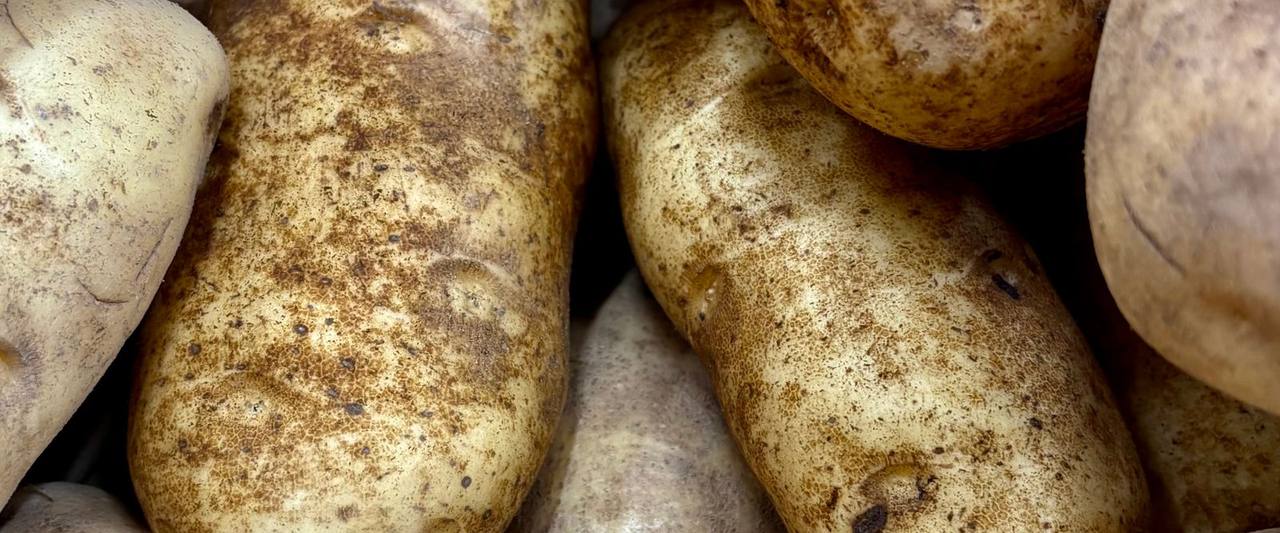
Reading Potato After a Record Bengal Crop: A POTATO Briefing on Stocks That Will Not Clear
This briefing reads the potato market in six parts, and the parts spell the crop: P, O, T, A, T, O. West Bengal, India's second-largest potato grower, harvested a record crop last season and is still sitting on more than a third of it in late October. Prices at the cold-storage gate are below what the grower spent to produce the tuber, early sowing for the next crop is already shrinking, and the trade is asking the state to subsidise moving the surplus out. Each part below carries its number.
P — Production: a record crop, and that is the problem
Bengal's 2025-26 potato production came in at around 140 lakh tonnes, the highest in five years, on favourable weather and better yields, according to the West Bengal Cold Storage Association figures reported on 24 October. The crop was grown on around 5 lakh hectares. A record harvest is normally a supply story that ends at harvest. Potato does not work that way. The tuber goes into cold storage and leaks back into the market for months, so last season's abundance is still this season's price.
O — Overflow: stores loaded past their normal line, and still a third full
Cold stores in the state loaded close to 80 lakh tonnes this year, against a normal loading of around 70 to 72 lakh tonnes. By late October, those stores were still holding 37 to 38 per cent of what was loaded. The association's own assessment is blunt: that is very high for this point in the year, weeks before the new crop's early varieties would normally start clearing the decks. Stock that should have been gone is still there, and every week it stays, it competes with the harvest coming behind it.
| West Bengal potato, 2025-26 | Figure |
|---|---|
| Production | ~140 lakh tonnes, highest in five years |
| Area | ~5 lakh hectares |
| Cold-storage loading | ~80 lakh tonnes (normal ~70–72 lakh tonnes) |
| Stock still in stores, late October | 37–38% of loading |
| Jyoti, truck-loading at store gate | ₹500/quintal, vs ~₹600 a year ago |
| Grower's earning within that price | ₹150–170/quintal |
| Kolkata wholesale, Jyoti | ₹11–12/kg, vs ₹15 a year ago |
Source: West Bengal Cold Storage Association and traders' body figures reported 24 October 2026. Farmioc.
T — Truck-loading price: ₹500 a quintal, ₹150 to the grower
At the cold-storage gate, the average Jyoti variety is loading at ₹500 per quintal, about ₹100 below the same period last year. Inside that ₹500, the grower's share is ₹150 to ₹170 a quintal — below the cost of production, the association says, after a year in which growers resorted to distress sales. In Kolkata's wholesale markets the same variety trades at ₹11 to ₹12 a kg, against ₹15 a year ago. A consumer sees a cheap vegetable. A lender with potato exposure in Hooghly or Burdwan sees a borrower whose stored collateral has been marked down all year and whose next crop is being planted with borrowed money that is already short.
A — Area: the next crop is shrinking before it is sown
The supply response has started, and it is starting where it always starts: with the early crop. Area under early varieties, mainly Pukhraj, is less than a year ago, and seed demand has fallen with it — growers who lost money on the stored crop are not in a position to sow early varieties, the traders' body says. The association's warning is conditional, and the condition is a date: if prices do not rise in the next month, total potato area in 2026-27 falls as well. That is how a glut corrects, slowly and at the grower's expense. It also means next season's supply is being decided now, by this month's gate price, not by any planting intention survey.
T — Trade: markets lost to Uttar Pradesh, and a subsidy asked to win them back
Bengal used to move 20 to 25 lakh tonnes of surplus potato to other states every year — Odisha, Bihar, Jharkhand and Assam depended on it. A state restriction on interstate movement in 2024, imposed to hold local prices down, handed most of those markets to Uttar Pradesh; the restriction was later withdrawn, but the buyers did not automatically come back. In September the state announced a transport subsidy of ₹100 per quintal for interstate movement by railway rakes. Both trade bodies are now asking for the same support for road transport, arguing that rail alone will not clear the stock still sitting in stores. Policy made this surplus harder to move once. The trade is asking policy to pay to move it now.
O — Outlook: the clearance rate decides two seasons, not one
Everything in this market hangs on the next few weeks of store clearance. If the remaining 37 to 38 per cent moves — helped by the rail subsidy, a road subsidy if it comes, and festive demand — gate prices can recover enough to hold 2026-27 area close to 5 lakh hectares. If it does not move, Bengal gets the worst sequence in a storage crop: old stock discounted into the new harvest, a smaller new crop planted by growers with less working capital, and a supply correction that arrives a season late and overshoots. None of that requires a weather event. It is arithmetic already sitting in the stores.
The decision
For cold-storage lenders and traders, mark the stock to ₹500 a quintal at the gate, not to last year's ₹600, and treat the grower's ₹150 to ₹170 realisation as the repayment number — because it is. For buyers in the eastern states, Bengal's surplus is real and cheap, but it is a wasting asset: quality in store deteriorates, and the lots worth contracting are the ones that move first. For anyone planning 2026-27 supply, watch the clearance percentage and the early-variety area, not the headline record crop. Last season's production is history. The stock overhang is the market.
PriceHub follows mandi and storage-linked price series across crops, so an overhang like this one shows up as a price path a buyer or lender can act on, not as a surprise at the store gate.