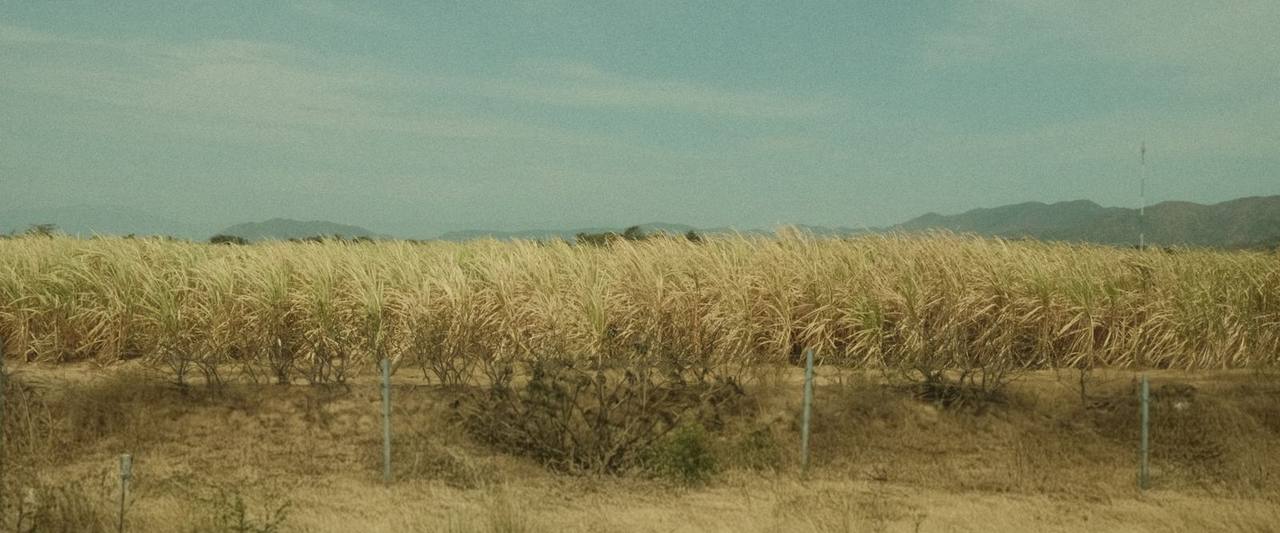
Sugar's New Season Starts With the Thinnest Cushion in a Decade
This briefing reads the sugar market in five parts, and the parts spell the subject: S, U, G, A, R — supply revised down in steps, an unusually thin opening stock, government levers pulled in sequence, availability being rebuilt through imports and quotas, and a risk that sits in November rather than in the festival week. The new sugar season opened on 1 October. Almost every number in it has been revised once already, and the revisions all point the same way.
S — Supply, revised down in steps
The first revision came from the government itself. In August, the Food Ministry clarified that sugar production for the 2025-26 season was estimated at around 30.6 million tonnes, well below the initial estimate of about 34.3 million tonnes. A month later the ministry put the same figures to an industry conference and named the causes: cane losses to Red Rot and Top Borer diseases, with waterlogging in cane tracts compounding the damage to yields and recovery.
The industry's own estimator moved in parallel. ISMA cut its gross production estimate, excluding ethanol diversion, to around 30.9 MT from an earlier 34.5 million tonnes, citing weather, lower cane yields and reduced recovery. Two estimators, two methods, the same conclusion: the season just ended produced roughly a tenth less sugar than the system planned for.
| Estimate | Initial | Revised |
|---|---|---|
| 2025-26 production — Food Ministry | 34.3 MT | 30.6 MT |
| 2025-26 gross production — ISMA | 34.5 MT | 30.9 MT |
| 2026-27 production — USDA FAS forecast, 8 Oct 2026 | 33.6 MT | 29.5 MT |
Sources: Food Ministry, August–September 2026; ISMA, 1 October 2026; USDA Foreign Agricultural Service forecast via Reuters, 8 October 2026. Chart: Farmioc.
The third row is a forecast, and it is labelled one. On 8 October the USDA's Foreign Agricultural Service post in New Delhi revised its 2026-27 production view down to 29.5 million tons, from 33.6 million, with the cane crop projected at 434 million tons against 455 million last season. A forecast can be wrong in either direction. But when the official estimate, the industry estimate and the external forecast have all been cut by similar proportions within eight weeks, a buyer planning on the original numbers is not being conservative. He is being slow.
U — Unusually thin opening stock
Production shortfalls become market events through the stock line, and this year's stock line is the thinnest in over a decade. Industry sources put opening stocks for 2026-27 at 3.75 million tonnes on 1 October, against around 5 MT a year earlier. That carry-in has one job: covering October and November demand until crushing gathers pace across Maharashtra, Uttar Pradesh and Karnataka. It is roughly a quarter smaller than the stock that did the same job last year.
The export door reflects the same arithmetic. India restricted sugar exports in May 2026, the restriction ran to 30 September, and industry expectations are that it will continue. The one opening since is small and quota-bound: DGFT has permitted 5,841 tonnes of exports to the European Union under a tariff rate quota for 2026-27. Five thousand tonnes against a 30-million-tonne market is a diplomatic channel, not a trade flow. Anyone modelling an export release as this season's pressure valve should model something else.
G — Government levers, pulled in sequence
What distinguishes this season is not any single intervention. It is the sequence, and the speed at which each lever has been tightened after the previous one.
The dealer stock limit has been cut three times. It began at 4,000 quintals from 1 August, with 30 days to hold; it fell to 2,000 quintals from 15 September; from 15 October to 30 November it is 1,000 quintals, with stock held for no more than 15 days. Kolkata and its extended metropolitan area, and Assam, keep a limit of 2,000 quintals — the ministry's reasoning is logistics: Kolkata redistributes sugar across the east and northeast, and Assam's supply lines are long. Bulk consumers using more than 10 tonnes a month were separately capped at 15 days' consumption back in August.
Mill sales, meanwhile, no longer run on a monthly quota. From September the allocation went fortnightly, and under the order for the first half of October, mills must sell at least 45 per cent of their allocation in the first week. When ex-mill prices spiked this month, the second fortnight's order came two days early: 14 lakh tonnes to domestic mills plus 2 lakh tonnes to importers, 16 lakh tonnes in all, released for sale from 13 October. Of the mills' share, 83 per cent sits in three states — Maharashtra 4.76 lakh tonnes, Uttar Pradesh 4.51, Karnataka 2.32 — and 134 of the 587 mills covered received no allocation at all.
Read the sequence as a trader has to. The state is no longer setting a monthly frame and letting the market clear inside it. It is rationing time itself: how much a dealer may hold, for how many days, and which week a mill's sugar must move in. Working capital assumptions built on last season's holding patterns are obsolete, and they were made obsolete in under ninety days.
A — Availability, rebuilt through imports and quotas
Against the short domestic crop, the government opened an import channel it has not used in about a decade: duty-free imports of 10 lakh tonnes of raw sugar under a tariff rate quota. Permits have been approved for about 8 lt of that quantity, and an amendment on 7 September gave importers practical room: imported raw sugar must now be refined and sold domestically within two months of the Bill of Entry, replacing the original hard deadline of 31 October.
The price record shows why the levers kept moving. On 1 October the Food Ministry reported average retail prices fallen 15 per cent from their August peak, with ex-mill prices down around 28 per cent and stable for three weeks. A fortnight later the market had turned again: ex-mill prices rose nearly ₹1,000/quintal in ten days, Uttar Pradesh ex-mill reached ₹5,400/quintal from about ₹4,450, and the Consumer Affairs department put the all-India average wholesale price at ₹5,254.91 per quintal on 13 October, with retail averaging ₹56.67 a kilo.
One more number in this section deserves a cold eye. The two refiners permitted to sell imported sugar domestically were allocated 3 lakh tonnes between 1 September and 15 October, and sold less than 60,000 tonnes of it, because at prevailing prices the imported sugar did not pay. An import quota is not supply. It is an option on supply, and this season the option has mostly gone unexercised — a fact worth remembering every time a headline announces fresh import room.
R — Risk sits in November, not in the festival week
The festive fortnight will probably be managed. Quotas have been front-loaded, crushing has started early — 30 mills in Maharashtra were already running by 13 October, with Uttar Pradesh mills expected from around 20 October — and mills that crush in October may sell that production outside their quota. The strain the trade is watching comes after Diwali, and its arithmetic was stated plainly by a trade source this week: October's allocation to domestic mills is 27 lakh tonnes against a closing stock of 32–35 lakh tonnes on 30 September, November demand runs around 24–25 lakh tonnes, and managing November needs at least 12-13 lt of production in October itself. That is a trade estimate, not an official figure. It is also the first genuinely testable number of the season: October's actual crushing output will confirm or break it within weeks.
Two structural points close the reading. First, the government will now track sugar production on a monthly basis, with mills required to file production and sales data — the information lag that let this season's shortfall surface late is, at least on paper, being closed. Second, the ethanol question that hangs over every Indian sugar balance is smaller this year than the headlines suggest: the government's own note puts diversion at around 9% in 2025-26, down from around 12% in 2022-23, with nearly three-fourths of ethanol now made from grains, and the government has ruled out diversion as the cause of the price rise. The shortfall is a cane and weather story. Pricing it as an ethanol story misprices it.
The decision paragraph is short. Bulk buyers — beverage, confectionery and food-processing units — should plan procurement around the 15-day stock cap and the fortnightly quota calendar, not around annual contracts priced on last season's availability; cover bought a fortnight at a time is now a compliance position as much as a trading one. Mills should treat the quota order, not the order book, as the sales plan through November, and lenders carrying sugar collateral should revalue it on movement: in a market where ex-mill prices can move ₹1,000 a quintal in ten days and the state can halve a dealer's holding period by notification, stock that cannot move is not worth what stock that can move is worth. Farmioc PriceHub tracks prices, trends and forecasts for more than 200 crops across India — the layer where quota orders, mandi prices and stock limits can be read together as this season's balance is tested, month by month.
Farmioc is India's agriculture data analytics and agri trading company. Explore PriceHub for commodity market intelligence across 200+ crops, or DataStore for supply, demand and yield analytics.