Two Cyclones in Six Days, and the Loss Still Has to Be Counted Three Ways
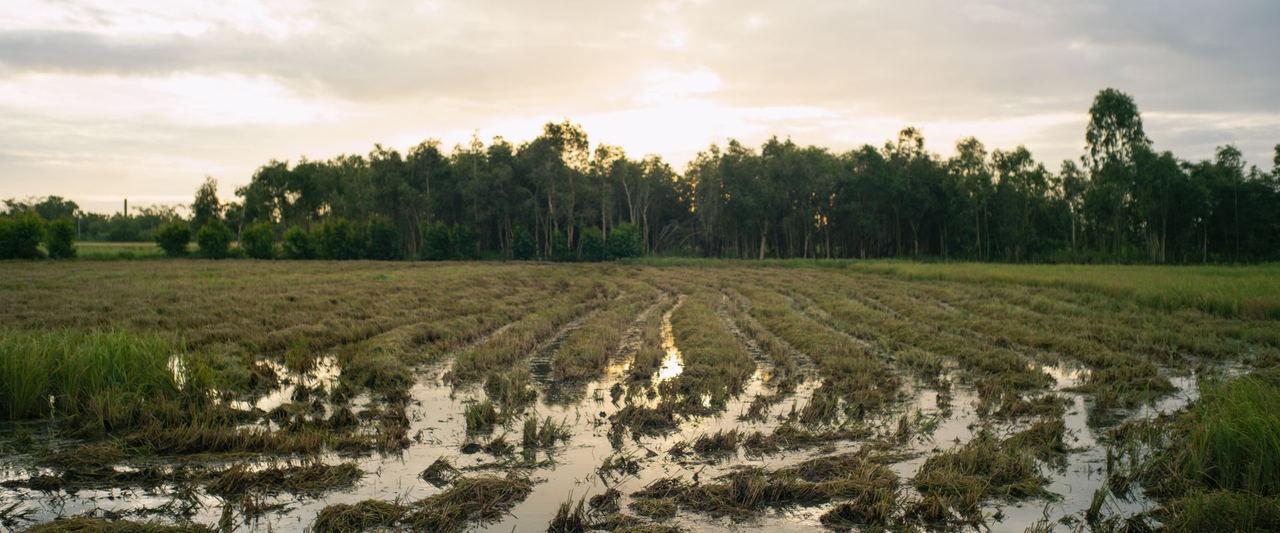
On 28 October, Cyclone Arnab crossed the Andhra Pradesh coast near Yanam and Kakinada. Six days later, in the early hours of 3 November, Cyclone Murasu came ashore near Ongole, on the same coast. Kharif paddy in the Godavari delta was close to harvest when the first storm hit. In Odisha's Ganjam district, fields were still holding Arnab's floodwater when Murasu approached the coast — officials there had planned to survey the first storm's damage once the weather cleared, and the weather was not done. For insurers, lenders and anyone buying paddy out of the delta this season, the argument that matters now is not about wind speed. It is about how a crop loss gets counted, by whom, and how many times the same field gets counted twice.
The first count is a working number, not the loss
Andhra Pradesh's preliminary assessment, as it stood on 3 November, put crop damage at about 3.5 lakh hectares, with horticulture damage on more than 22,000 hectares, over 4.6 lakh farmers affected and a total state loss of about ₹4,526 crore. Every one of those figures carries the word preliminary, and the state's own first report shows why. The district split published on 29 October — West Godavari 76,176 hectares, Konaseema 44,232, Kakinada 42,222, East Godavari 29,866, Krishna 22,339 — already adds up to roughly 2.15 lakh hectares in five districts, and later estimates were higher. Across the border, Odisha's agriculture officials put Arnab's crop damage at around 90,000 hectares, worst in Ganjam, where paddy covered about 2.16 lakh hectares this kharif and September flooding had already taken more than 3,402 hectares before either cyclone formed. That is two damaging floods on the same Ganjam crop in five weeks, before the second cyclone's own damage is even counted. A loss ledger that merges them into one event will misprice both.
| Early damage ledger (preliminary) | Figure |
|---|---|
| Andhra Pradesh — crops damaged | ~3.5 lakh hectares |
| Andhra Pradesh — horticulture damaged | Over 22,000 hectares |
| Andhra Pradesh — farmers affected | Over 4.6 lakh |
| Andhra Pradesh — total loss | ~₹4,526 crore (preliminary) |
| Odisha — crops damaged (Arnab) | ~90,000 hectares (early estimate) |
Source: Andhra Pradesh preliminary assessment as of 3 November 2026; Odisha agriculture officials' early estimate reported by PTI (2 November 2026). Murasu damage in Andhra Pradesh has no verified hectare figure yet. Farmioc.
One threshold, three systems
Relief, credit and compensation all turn on a single number: 33 per cent. Under the Home Ministry's disaster norms, input subsidy is payable where crop loss is 33% and above — ₹8,500 per hectare for rainfed crops, ₹17,000 per hectare for assured irrigated crops and ₹22,500 for perennial crops, with assistance capped at 2 hectares per farmer. Odisha's package of 1 November applies those rates directly and then goes one step further: short-term crop loans of farmers at or above the same loss line are converted to medium-term loans, alongside 1.75 lakh free seed minikits for the rabi restart. Read that as a lender, not as a relief officer. The village-level loss percentage that decides a family's input subsidy is the same percentage that decides whether its crop loan gets rescheduled. A bank's district exposure file and the relief department's enumeration sheet are, this month, two copies of one dataset — and the bank that waits for the final published version will be the last to know its own position.
Insurance runs on a separate clock, and a shorter one
Crop insurance does not wait for the state's count. From this kharif season, paddy inundation is back under the Pradhan Mantri Fasal Bima Yojana as a localised calamity — it was removed in 2018 — and the Agriculture Ministry's own release names Odisha among the coastal states the change was made for. Localised claims are assessed farm by farm, not from district averages, and the reporting window is tight: losses are to be reported within 72 hours through the Crop Insurance App, the helpline or the bank, with cover also running to post-harvest losses from cyclonic rain for up to 14 days. The framework the Ministry set out for the newest localised covers leans on exactly this machinery — app-based reporting with geotagged photographs. Two storms complicate it in a specific way. Where a Ganjam field sat under Arnab's water for a week and then faced Murasu's rain before any surveyor arrived, splitting the damage between the two events is a judgement call with money attached. That is where plot-level records — sowing dates, the geotagged report, the rain record for that week — stop being paperwork and start being the claim.
The Centre's visit turns estimates into money
There is a third count, and it decides the largest cheque. An eight-member inter-ministerial central team, led by a Home Ministry joint secretary, reached Odisha on 2 November and worked through Gajapati and then Ganjam, the worst-hit district. Odisha's revenue minister's review on 3 November set the sequence out plainly: collectors file preliminary reports first, and full final reports go to the Government of India after. Central assistance beyond the state's disaster fund follows the central team's assessment, not the state's first numbers. The state has added assessment capacity to match — four IAS officers posted as additional relief commissioners in the three worst districts, and 145 extra agriculture staff sent into Ganjam alone — because the binding constraint after a cyclone is rarely money. It is enumerators. Murasu consumed the dry-weather window in which Arnab's enumeration was supposed to happen, so the two counts will land together, later, and probably larger.
What to do with three unfinished numbers
Work with the counts separately, because they settle at different speeds and for different purposes. Insurers should reserve against the preliminary state figures — roughly 3.5 lakh hectares in Andhra Pradesh and 90,000 hectares in Odisha — but settle localised inundation claims on plot records, where the second storm will otherwise be billed to the first. Lenders should pull the 33 per cent lists district by district as enumeration publishes them; those lists are the rescheduling pipeline, and they will move before any portfolio report does. Buyers sourcing paddy from the Godavari delta should expect the damage to show up first in grain condition — moisture and sprouting in a crop that stood in water at harvest stage — and only later in arrival volumes. Farmioc's DataStore holds district crop, weather and water series on one ledger, so a loss percentage claimed for a block can be checked against the rainfall and flooding record that supposedly produced it. After a week like this one, that check is the whole business of risk.